

From Personal Reading to Group Discussion: Preparing Bible Study That Goes Deep
You're sitting with your Bible open, working through a passage for next week's study. You notice something interesting, then something else. Before long, you've filled half a page with observations and cross-references. You feel prepared.
Then the meeting happens. You share your insights. The group nods politely. Someone asks a surface-level question. The discussion never quite catches fire. Everyone leaves on time, but you're not sure anyone actually engaged with the text.
The problem isn't your preparation. It's that preparing to lead a group discussion requires fundamentally different eyes than preparing for personal study. You're not just reading for yourself anymore. You're scouting terrain for others to explore, noticing what might trip them up, marking what they need to discover on their own.
This article will show you how to prepare effectively, facilitate wisely, and create genuine space for others to own what they find in scripture. For more resources on building engaged communities, visit our homepage.
Why Your Personal Study Needs to Look Different Now

Most leaders make the same mistake when they start facilitating: they prepare by finding all the answers, then deliver them to the group. It feels responsible. You've done the work. You know what the passage means. Why wouldn't you share that?
Because group preparation isn't devotional reading. When you're reading for yourself, you're mining for truth. When you're preparing to lead, you're mapping a journey that others will take. The goal shifts entirely. You're no longer trying to extract maximum insight for yourself. You're trying to help participants own the text themselves.
This distinction matters more than most leaders realise. When you arrive with all the answers, you inadvertently signal that discovery isn't necessary. The group learns to wait for your input rather than wrestling with the passage. They become consumers of your insights instead of active readers of scripture.
The mindset shift changes what you look for when you read. You're not just asking "What does this mean?" You're asking "What will they notice? What might they miss? What questions will help them see what I'm seeing?"
You're reading to notice what others might miss
Start by reading entire chapters, not just the assigned verses. Groups that read whole books of the Bible notice repeated words and phrases that reveal structure and themes. Context isn't optional. It's how you spot patterns.
Take 1 John as an example. Read it straight through and you'll notice how often "love" and "truth" appear together. That pairing isn't accidental. It's structural. It tells you something about what John thinks matters. When you spot that pattern, you're not just finding a nice observation. You're identifying a thread the group can follow through the entire letter.
Use paper Bibles for this work. Digital screens invite distraction. Paper lets you see the full context on the page, mark connections, notice where paragraphs break. You're looking for the architecture of the passage, not just individual verses.
You're looking for questions, not just answers
Shift your focus from "What does this mean?" to "What questions does this raise?" Good questions invite discovery. Ready-made answers shut it down.
The best discussion leaders aren't the most educated. They're the most curious. They genuinely wonder about things. They notice tensions in the text and don't immediately resolve them. They let questions sit.
Write down the genuine questions that emerge during your reading. Not the questions you think you should ask, but the ones that actually puzzle you. These often spark the best group conversations because they're real. People can tell when you're asking a question you already know the answer to. It feels like a test, not an invitation.
Mark What Matters: The Star Question Method

You've noticed things. You've written questions. Now you face a practical problem: you can't use them all without dominating the discussion. You need to prioritise before the meeting, not during it.
This is where most leaders stumble. They prepare thoroughly, then try to make real-time decisions about what to emphasise whilst also listening, watching the clock, and managing group dynamics. It doesn't work. You need a system that keeps you focused and makes space for others.
Flag 50-70% of your questions that hit the main theme
Here's the method: before the meeting, mark 50-70% of your pre-set questions that directly target the passage's main theme. Physically star or highlight them in your notes. These become your anchors.
Why this percentage? It keeps discussion focused without being rigid. You're not trying to hit every question. You're identifying the ones that matter most. If the conversation wanders or stalls, you've got marked questions that bring people back to the core theme.
The discipline of choosing forces clarity. You can't star everything. You have to decide what actually matters. That decision-making process before the meeting protects you from trying to cover too much during it.
Write down what you won't say (so you don't dominate)
You've prepared thoroughly. You've got insights you're excited about. The urge to share them will be strong. Here's how you manage it: create a separate "don't share" list.
Write down the observations and answers you'll keep to yourself. This sounds counterintuitive, but it works. The act of writing satisfies the urge to share whilst protecting group space. You've acknowledged the insight. You've captured it. You don't need to say it out loud.
If these points are genuinely important, someone else will likely discover them. And when they do, their discovery will mean more than your explanation ever would. That's the paradox of good facilitation: the less you say, the more they learn.
Plan Your Silence: Building Space Into the Discussion
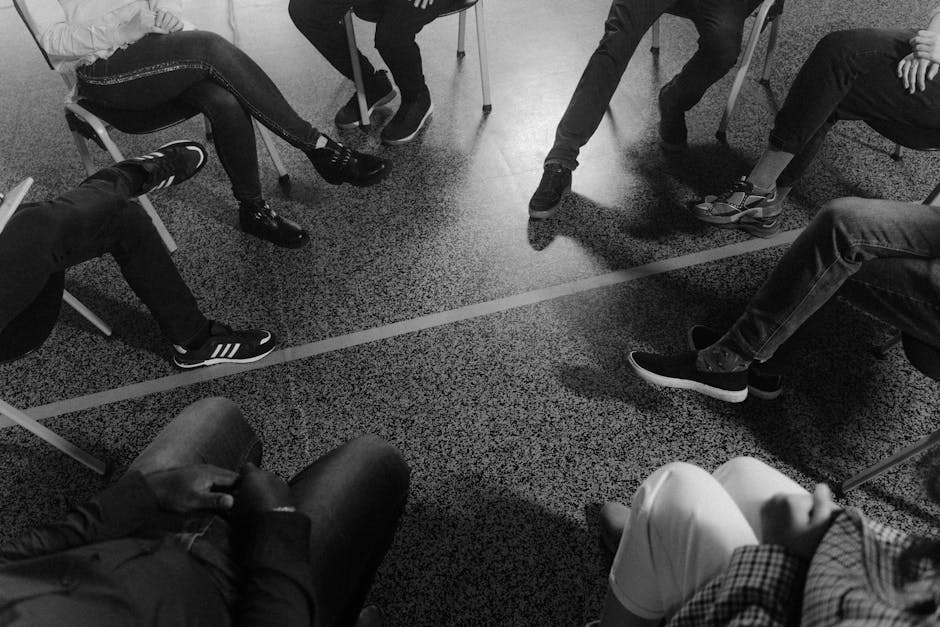
What you do matters as much as what you say. Content preparation gets you ready. Facilitation strategy determines what actually happens in the room.
Silence feels uncomfortable for leaders who feel responsible for keeping things moving. You worry that gaps mean disengagement, that quiet means you've lost them. Usually, the opposite is true. Strategic silence is a leadership tool, not a gap to fill.
The 3-5 minute reflection window after reading
After reading the passage aloud, allow 3-5 minutes of silent reflection before any discussion starts. This feels long. It will feel longer in the moment. Do it anyway.
This window gives everyone time to gather thoughts and notice details, not just the quick thinkers. Research shows this increases both participation and depth of engagement. People who need processing time get it. People who think out loud learn to think first.
Direct members on what to look for before the silence begins. "Notice where Paul repeats himself" or "Look for commands versus descriptions" gives them a focus. Silence without direction can feel aimless. Silence with a clear task feels productive.
The 2-3 strategy: wait for others before you speak
Here's the rule: wait for 2-3 group members to answer a question before you share anything. This prevents leader domination and signals that others' contributions are valued.
This feels difficult when you have the "right" answer ready. You'll want to jump in, to correct, to clarify. Resist. The strategy builds confidence in quieter members over time. They learn that their voice matters, that the leader isn't the only source of insight.
Sometimes those first 2-3 answers will be incomplete or slightly off. That's fine. Let the group work it out. If something genuinely needs correction, you can address it after others have spoken. But you'll be surprised how often the group self-corrects without your input.
When silence feels awkward, it's often working
Reframe awkward silence as a sign of deep thinking, not disengagement. When you ask a good question and get silence, people are processing. They're forming thoughts. Rushing to fill that silence prevents the very thing you're trying to create.
Let silence sit for longer than feels comfortable. Count to 10 internally if you need a target. Most leaders break at 3 or 4 seconds. That's not long enough for real thinking.
Avoid the common mistake of rephrasing questions too quickly. When you rephrase, you reset the thinking process. Everyone has to start over. If you've asked a clear question, trust it. Give people time to answer it.
From Prep to Presence: What Changes When You Sit Down
All this preparation enables you to be present rather than scrambling for content. The starred questions, the silence strategies, the "don't share" list - they free you to listen and respond instead of performing.
When you're not worried about what to say next, you can actually hear what people are saying now. You can take physical notes of member responses, praise helpful comments, invite quieter members directly. You can facilitate instead of lecture.
This is the paradox: the more thoroughly you prepare, the less you need to say, and the deeper the group goes. Your preparation creates space. Your silence invites discovery. Your restraint builds ownership.
The shift from solo reading to group discussion preparation isn't about learning new techniques. It's about changing what you're trying to accomplish. You're not there to showcase your insights. You're there to help others discover their own. Everything else follows from that.
For more insights on building engaged communities, explore our Blog or learn more About our approach to deepening engagement.


